Top Career Opportunities After Completing a Post-Diploma in Tool Design
December 18, 2025 2025-12-18 6:20Top Career Opportunities After Completing a Post-Diploma in Tool Design
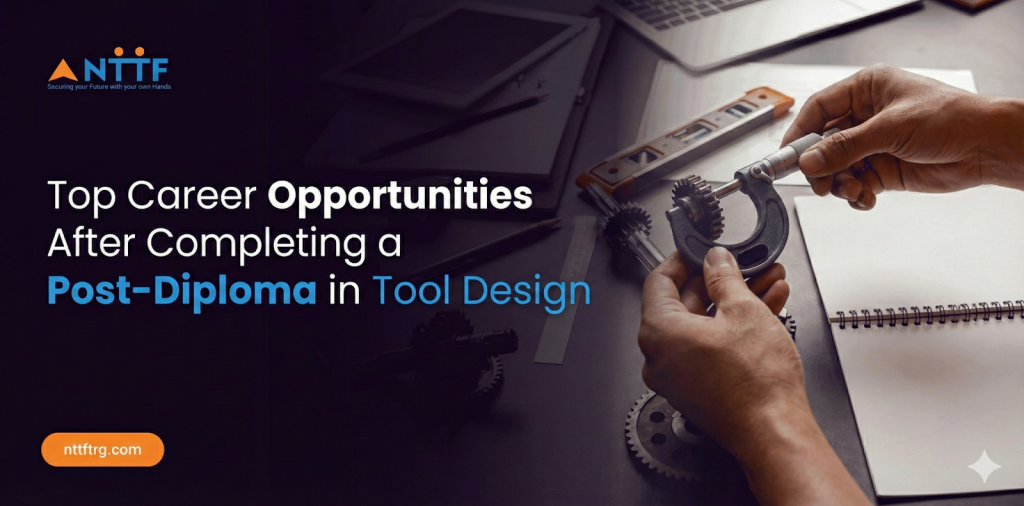
Tool design is a vital and fascinating field within engineering, providing the expertise required to design, build, and refine the essential tools and machinery used across countless industries. For students with a diploma in engineering, exploring a career path that combines creative design with high-precision technical skills, a post-diploma in tool design offers a rewarding gateway to a variety of roles. Here, we’ll dive into the exciting career prospects after completing a Post-Diploma in Tool Design, and provide an overview of NTTF’s Post Diploma In Tool Design(CP 05) along with highlighting the unique advantages of studying with NTTF.
Why Pursue a Career in Tool Design?
Tool design is integral to product manufacturing, helping bring ideas to life by creating the specialized tools necessary for production. Tool designers don’t just work with existing designs; they innovate and optimize tools that drive efficiency and precision across multiple fields, from automotive and electronics to healthcare and aerospace. The demand for skilled professionals in this field continues to rise as industries embrace new manufacturing technologies like digital manufacturing, automation, and smart factories.
For students who love problem-solving, mechanical processes, and hands-on work, tool design is a compelling field with substantial career growth opportunities. As a tool designer, you could work with cutting-edge software, collaborate with multidisciplinary teams, and play a pivotal role in ensuring the quality of end products. Let’s explore the exciting career paths available after earning an advanced diploma in tool design.
1. Tool Designer
Tool designers are responsible for creating detailed blueprints, drawings, and models for various tools, jigs, dies, and fixtures used in manufacturing. This role requires both creativity and technical knowledge, as you’ll work closely with engineers to design tools that ensure high-quality and efficient production. With a strong foundation in press tool technology and mould technology, you will be equipped to design solutions that streamline production and reduce costs.
After completing NTTF’s Post Diploma in Tool Design (CP05), you will achieve proficiency in Tool Design, with a particular focus on Press Tools for Sheet Metal and Moulds for Plastics,Die casting dies design and design of jigs and fixtures. making you highly competitive for roles in industries like automotive, aerospace, and consumer goods manufacturing.
2. Manufacturing Engineer
Manufacturing engineers oversee and optimize production processes, focusing on improving efficiency, reducing waste, and maintaining quality. As a manufacturing engineer with a background in tool design, you’ll have the skills needed to plan and create tools that meet specific production requirements. This is a strategic role where you can make a real impact by developing solutions that enhance the productivity of an entire production line.
NTTF’s courses after diploma in mechanical engineering provide a strong foundation in engineering principles and introduces students to digital manufacturing technologies. By understanding the end-to-end production process, you’ll be prepared to take on challenges that require both innovative thinking and technical acumen.
3. Product Development Specialist
In this role, you’ll work at the forefront of new product design and development. Product development specialists are heavily involved in prototyping and testing tools to support product innovation. From concept to production, your job will involve designing, evaluating, and refining tools to meet project specifications. This role is ideal for those who enjoy the excitement of bringing new products to market and solving design challenges along the way.
Students in NTTF’s 1-Year Post Diploma in Tool Design program gain hands-on experience in developing prototypes and testing designs, equipping them with the skills necessary to thrive in product development roles across a range of industries.
4. Mechanical Design Engineer
Mechanical design engineers specialize in creating mechanical components and systems. With a post-diploma in tool design, you’ll have a competitive edge in designing mechanical parts that interact with various tools and machinery. This role offers you the chance to use both creative and technical skills to bring new designs to life, contributing to industries that produce everything from consumer electronics to heavy machinery.
5. Head of Design Department :
A Post Diploma in Tool Design equips a student with Strong Technical Foundation, Expertise in CAD / CAE Software, Industry-Oriented Practical Exposure, Progressive Career Growth Path, Leadership and Team Management Skills, Industry Recognition and Trust. Therefore Post Diploma in Tool Design is not just a qualification—it is a career accelerator. With continuous learning, practical experience, and leadership development, it can take a motivated professional to the position of Head – Design Department, playing a key role in shaping an organization’s engineering excellence.
How NTTF Prepares You for These Careers
NTTF (Nettur Technical Training Foundation) is renowned for its high-quality technical education and industry-aligned courses. With an emphasis on practical skills and industry relevance, NTTF’s courses after mechanical diploma in tool design equip students with the competencies required to succeed in the real world.
The Post Diploma in Tool Design (CP05) is tailored for students who wish to specialize in tool design. This program covers advanced topics and offers extensive hands-on experience in designing tools for manufacturing applications. Key features include:
Why Choose NTTF for Your Career in Tool Design?
NTTF’s commitment to quality education is evident in its state-of-the-art facilities, experienced faculty, and strong industry connections. With dedicated training in tool engineering and design, you’ll gain not only theoretical knowledge but also practical skills that make you job-ready upon course completion.
Post Diploma in Tool Design (CP05) Program Curriculum
Duration- 1 year(2 semesters)
Semester 1
- Engineering Drawing/Drafting Practice: Provides foundational skills in technical drawing, crucial for visualizing and planning designs.
- Metrology: Focuses on measurement techniques and precision instruments, essential for maintaining accuracy and quality in tool design.
- Material Technology & Heat Treatment: Covers materials used in tool making and methods like heat treatment to enhance their durability and performance.
- Gauges and Jigs & Fixtures: Introduces the design of gauges and fixtures that ensure accurate production.
- Press Tool Technology: Explores the basics of designing press tools, which are essential in forming and cutting processes.
- Mould Technology: Provides an overview of moulding techniques used in manufacturing products with complex shapes.
- Design of Gauges and Jigs & Fixtures: Practical training in creating designs that streamline and support manufacturing processes.
- Hands-On Training on Machines and Inspections: Students gain practical experience with machinery and perform inspections to understand manufacturing standards.
Semester 2
- Press Tool Technology: Expands into advanced press tool applications, including complex designs and their uses in high-volume manufacturing.
- Mould Technology: Delves deeper into mould technology, with a focus on more complex moulding processes.
- Design of Press Tools: Covers specific techniques for designing press tools tailored for different materials and products.
- Design of Moulds: Teaches students to create effective mould designs, essential in various manufacturing sectors.
- Design of Die-Casting Moulds: Focuses on die-casting, a process used to produce strong, dimensionally accurate metal parts.
- Process Planning: Involves planning the steps in tool design and manufacturing, optimizing efficiency, and ensuring seamless production flow.
- Project Work: A capstone project that allows students to apply all their learning in designing a complete tool or fixture from start to finish, often simulating real-world challenges and solutions.
This curriculum combines theoretical concepts with practical skills, equipping students with comprehensive knowledge in tool design, manufacturing processes, and quality control, ensuring readiness for industry roles.
Key Skills You’ll Gain
- Mechanical and Analytical Skills: Understanding the principles of mechanical design and manufacturing processes will set you apart in the industry.
- Problem-Solving Abilities: As a tool designer, you’ll need to address challenges in production, design, and quality control with innovative solutions.
- Software knowledge: Unigraphics, Solidworks, Autocad, Fusion 360
Building a Successful Career in Tool Design with NTTF
Completing a post-diploma in tool design opens doors to a range of high-impact careers. With NTTF’s Post Diploma in Tool Design (CP05), you’re not just earning a qualification; you’re stepping into a future filled with opportunity. Whether you envision yourself designing intricate tools, managing production teams, or leading innovation in product development, a solid foundation in tool design from NTTF can help you achieve your career goals and make an impact in the manufacturing world.Choose a future filled with growth, creativity, and hands-on problem-solving—choose a career in tool design with courses after diploma in mechanical engineering at NTTF.