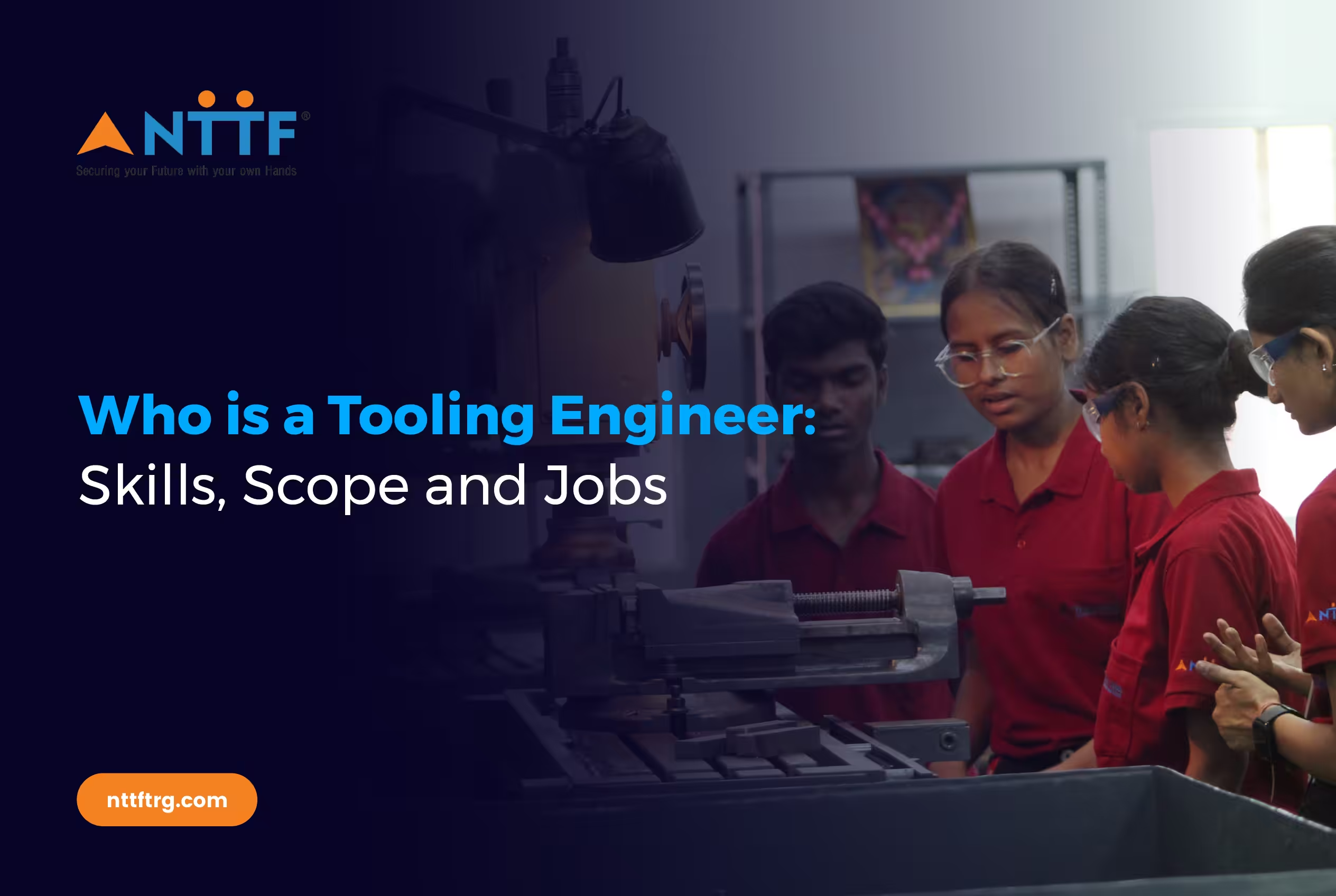
Then keep reading. This blog will walk you through who a tooling engineer is, what skills you need, the kind of work they do, and how a course like the Diploma in Tool Engineering & Digital Manufacturing (CP01) at NTTF can give you the right head start.
Who is a Tooling Engineer?
A Tooling Engineer is someone who designs, develops, and manages the tools used in manufacturing processes. These tools can include plastic molds, jigs and fixtures, die-casting dies, and cutting tools—basically, everything that helps shape and create a product.
Think of a Tool and Die Engineer as the backbone of production. Without them, no parts would be made with precision. Whether it is plastic components in electronics, metal frames in automobiles, or even intricate parts in medical devices—it all starts with tooling.
Additionally, the tooling engineer’s work is not just about creating tools. A tooling engineer also works on improving existing tools, maintaining them, and sometimes even figuring out how to make production faster and more cost-effective.
What Skills Does a Tooling Engineer Need?
By now, it might be clear who a tooling engineer is. But the big question still remains—what skills do they need?
You do not need to be a genius to become one—but yes, it is very important to be curious, hands-on, and technically inclined. Here are some key skills that help:
1. Mechanical Aptitude
If you are someone who enjoys working with machines, understanding how things work, and figuring out how to make them better—this is the right fit for your curious mind. A good sense of measurement and mechanics goes a long way.
2. Design Knowledge
As mentioned, a tooling engineer is the backbone of production. This role involves a lot of design work—mainly using CAD tools. Knowing 2D and 3D design software is a must.
3. Problem-Solving Mindset
This skill is really important for any role. Sometimes, tools do not perform as expected. Instead of getting upset or stuck, you need to think practically and come up with fixes that do not slow down production.
4. Attention to Detail
In this field, even a small error in tool design can cause major delays or waste. Precision and accuracy matter a lot. A lot depends on the tooling engineer, so you need to have a keen eye for everything.
5. Teamwork and Communication
Tooling engineers work closely with designers, production teams, and quality engineers. Good communication and a collaborative spirit help everything run smoothly.
What is the Scope for Tooling Engineers?
We are moving fast into the era of different aspects of AI and new technology every day—so you can imagine the scope. But know this that the demand is high and only getting stronger.
Industries like automotive, aerospace, electronics, packaging, and medical devices are always looking for skilled tooling professionals. As companies adopt technologies like digital manufacturing and Industry 4.0, tooling processes also need to evolve.
If you like developing things from scratch, working behind the scenes, and being the one who makes production possible—this could be your calling.
Tooling engineers can work as:
- Tool Design Engineers
- Die Designers
- Manufacturing Engineers
- Product Engineers
- Process Planners
- CNC Programmers
And with experience, you can even move into management, R&D, or start your own tool room business. There are ample opportunities if you have the right knowledge and practical learning to enter this field.
How Can NTTF Help You Become a Tooling Engineer?
If you are looking for diploma courses with placement, or something practical and career-focused, NTTF is the place to be.
Our Tool Engineering & Digital Manufacturing program is designed for students who want to build real-world skills, not just sit in classrooms.
Here is what you get:
- A strong foundation in tool design, including press tools, plastic molds, and die-casting dies
- Training in CAD, CAM, and CAE software
- Hands-on experience through workshops and industry projects
- Exposure to modern manufacturing and digital production tools
- Final semester internship with a stipend in a reputed company
- Career support through our placement cell and strong industry connections
We also offer a Postgraduate Degree in Tool Engineering (CP06) – PGTE ideal for those who want to specialize further after completing a diploma or engineering degree.
Hence, becoming a Tooling Engineer might be the best decision you make. The manufacturing world will always need people who can create, maintain, and innovate the tools that power production. It is a field with scope, growth, and job satisfaction.
And the best part? At NTTF, we help you every step of the way—with training, mentorship, and placements. So, if you are ready to build your future from the ground up, start with the tools.
Explore our programs here: