What are the 3 major aspects of digital manufacturing?
March 20, 2026 2026-03-24 7:14What are the 3 major aspects of digital manufacturing?
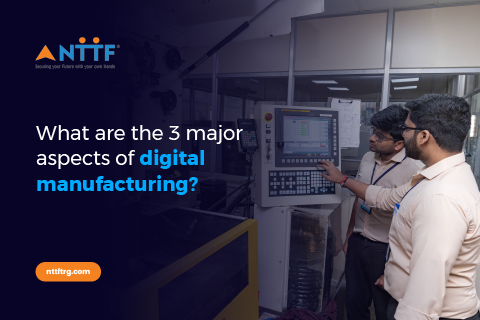
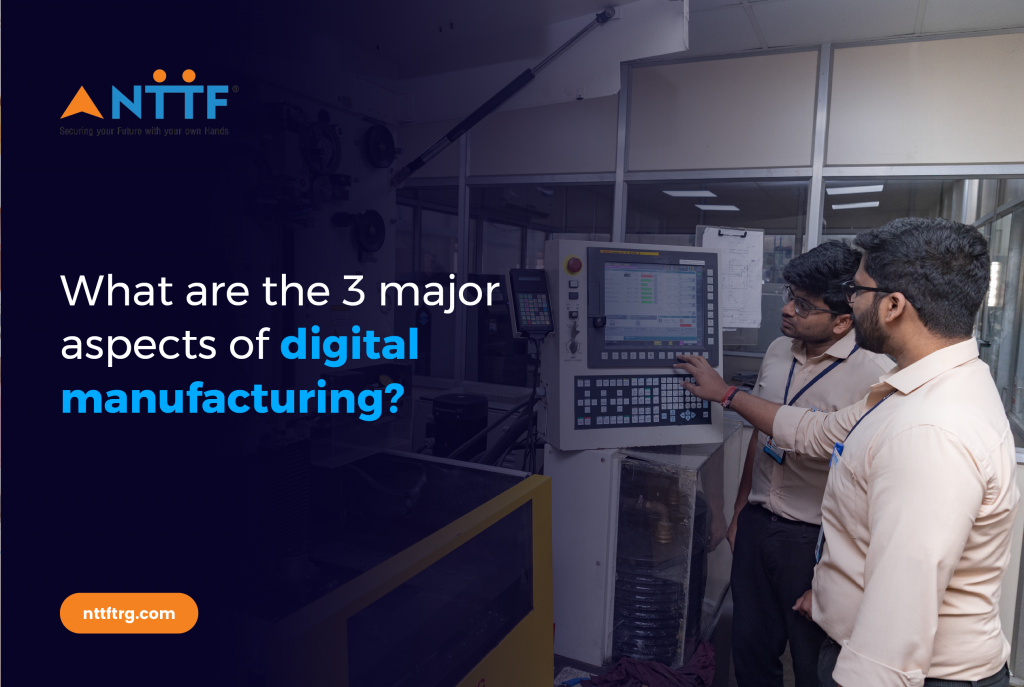
Digital manufacturing is the use of computer systems, software, and digital technologies to plan, design, simulate, and manage manufacturing processes and operations. It integrates digital tools across the entire production lifecycle—from product design to production and even maintenance—enabling faster, more efficient, and more flexible manufacturing.
Key Aspects of Digital Manufacturing:
- Computer-Aided Design (CAD): Digital tools for designing products in 2D or 3D.
- Computer-Aided Manufacturing (CAM): Software that helps plan and control manufacturing processes using digital designs.
- Simulation and Modeling: Virtual testing of processes or systems before building physical prototypes.
- Industrial Internet of Things (IIoT): Connected sensors and devices that provide real-time data from machines and operations.
- Additive Manufacturing (3D Printing): Using digital files to directly create parts layer by layer.
- Digital Twins: A virtual model of a physical process, product, or system that helps optimize performance.
- Automation and Robotics: Digitally controlled systems that perform manufacturing tasks with minimal human input.
- Data Analytics and AI: Leveraging data to improve efficiency, quality, and predictive maintenance.
Understanding and mastering these elements is not optional anymore; it’s essential. At Nettur Technical Training Foundation (NTTF), we’re not just keeping pace with these advancements — we are setting the standard. Through our cutting-edge programs like Diploma in Tool Engineering and Digital Manufacturing – CP01, we’re preparing India’s youth to lead the factories of tomorrow.
Let’s explore the three pillars reshaping global manufacturing — and how NTTF is transforming students into pioneers of this digital revolution.
1. The Digital Product Lifecycle: Turning Concepts into Smart Products
A product’s journey no longer begins on a drafting table. It starts in a virtual space where engineers manipulate designs using 3D CAD models, simulate performance in real-time, and make data-driven decisions before a single part is manufactured.
This is the Digital Product Lifecycle — a seamless thread of information that connects every stage of a product’s existence, from conception to disposal.
Core Elements:
- 3D Modeling and Simulation: Design and test digital twins to optimize performance, reduce cost, and minimize physical prototyping.
- Lifecycle Management (PLM): Track product changes, materials, documentation, and workflows digitally across teams.
- Digital Prototyping: Replace physical trials with virtual iterations using high-fidelity simulation.
How NTTF Equips You:
Our Diploma in Tool Engineering and Digital Manufacturing — CP01 provides students with in-depth exposure to digital design tools like CAD/CAM using Fusion 360, CNC turning and milling operations, and Engineering Drawing. From Year 2 onwards, students work on real-world projects, learning how to integrate digital manufacturing processes including CNC CAM programming, EDM (Electrical Discharge Machining), and Digital Inspection that improve precision and production quality.
Graduates leave not just with knowledge — but with experience, ready to become CAD engineers, product developers, or PLM specialists in advanced manufacturing firms.
2. The Smart Factory: Where Machines Think, Predict, and Adapt
Imagine a factory that self-corrects its workflows, predicts machine failures before they happen, and produces custom parts on demand without pausing operations. This is not fiction — it’s the reality of Smart Factories.
Built on the principles of cyber-physical systems, Industrial Internet of Things (IIoT), artificial intelligence, and cloud computing, Smart Factories are the engine rooms of Industry 4.0.
Defining Technologies:
- IoT Integration: Sensors and devices collect real-time data across machines, products, and systems.
- Automation and Robotics: Smart machines that perform repetitive, high-precision tasks with minimal human intervention.
- Predictive Maintenance: AI algorithms that analyze machine data to predict wear-and-tear before breakdowns occur.
- Digital Dashboards: Centralized, cloud-connected platforms that monitor factory performance in real-time.
How NTTF Bridges the Gap:
Through our Diploma in Tool Engineering and Digital Manufacturing – CP01, learners gain expertise in robotics, PLC programming and IIoT applications. Courses are designed to be intensely hands-on, supported by state-of-the-art labs and industry-linked projects.
Whether it’s controlling robotic arms or analyzing sensor data, students graduate with the skills to design, manage, and optimize smart manufacturing systems.
3. Connected Value Chains: The New Nerve System of Manufacturing
Gone are the days when production and supply chains worked in silos. Today’s manufacturing is about agility, visibility, and end-to-end integration. A Connected Value Chain brings together suppliers, manufacturers, logistics partners, and even customers into a digitally synchronized ecosystem.
Highlights:
- Real-Time Supply Chain Visibility: Know where every component is, how it’s moving, and what impact delays might have.
- Responsive Manufacturing: Rapidly adapt production to shifting demand, custom orders, or supply chain disruptions.
- Sustainable Manufacturing: Use digital tracking to minimize energy waste, carbon emissions, and raw material inefficiency.
- Data-Driven Decision-Making: Every node in the value chain becomes a data point, feeding analytics engines that improve strategy.
NTTF’s Strategic Edge:
Our Diploma Course in Tool Engineering & Digital Manufacturing integrates core manufacturing fundamentals with advanced tool design and Industry 4.0 technologies. Students learn to craft precision Press Tools, Plastic Moulds, and Jigs & Fixtures, while also gaining hands-on experience in Additive Manufacturing (3D Printing), Automation with PLC & Robotics, IIoT, Production Planning & Control, and Quality Management — preparing them to contribute to digitally connected, smart manufacturing environments.
From custom part development to IoT-enabled supply chain systems, our graduates play pivotal roles in keeping value chains intelligent and resilient.
Why NTTF? Because you must choose the best for your future.
In an age where every manufacturer is racing to adopt smart systems, NTTF is equipping students with what the industry demands today — and anticipates for tomorrow.
What Sets NTTF Apart?
- Industry-Vetted Curriculum: Each program is developed in collaboration with global industry leaders.
- Hands-On Learning: 70% of all learning is practical, ensuring you’re job-ready from day one.
- Global Exposure: International collaborations, guest lectures, and exchange programs connect students to global best practices.
- Placement Success: With a 99% placement rate, our alumni are thriving at companies like Bosch, Tata Motors, TVS Motor, and Ashok Leyland.
From diploma holders to engineering graduates, NTTF offers something for every level of technical ambition.
NTTF Digital Manufacturing Programs at a Glance
Diploma Programs
- Diploma in Tool Engineering and Digital Manufacturing – CP01
A comprehensive 3-year program focusing on:
- Tool design and manufacturing processes
- Computer-Aided Design (CAD) and Computer-Aided Manufacturing (CAM)
- CNC machining and automation technologies
- 3D printing and rapid prototyping
- Graduates receive certifications at each stage:
- Year 1: Mechanical Fitter
- Year 2: Junior Tool Maker
- Year 3: Senior Technician in Digital Manufacturing and Tool Engineering
- Diploma in Mechatronics Engineering and Smart Factory – CP15
This program integrates mechanical, electrical, and computer engineering to prepare students for:
- Smart manufacturing environments
- Automation and robotics
- Internet of Things (IoT) applications in manufacturing
Certificate Programs
- Certificate Program in Conventional and CNC Machinist
A short-term course focusing on:
- Conventional machining techniques
- CNC machine operation and programming
- Online Courses in Industry 4.0 and 3D Printing
These courses cover:
- Principles of Industry 4.0
- Additive manufacturing techniques
- Applications of 3D printing in modern manufacturing
International Certification
NTTF offers concurrent international diplomas in partnership with the UK’s National Open College Network (NOCN). These globally recognized qualifications enhance employability in both domestic and international markets.
Industry Collaboration
In collaboration with Bosch Limited, NTTF offers a joint certification training program focused on Industry 4.0. This program provides hands-on training in smart automation technologies and aims to bridge the skills gap in the modern manufacturing sector.
Conclusion: Learn Digital. Manufacture Smart. Lead the Future.
Digital Manufacturing is more than a trend — it’s a revolution. Those who understand the Digital Product Lifecycle, master the Smart Factory, and optimize the Connected Value Chain will shape the future of global industry.
At NTTF, we don’t just teach digital manufacturing — we empower students to redefine it.
So whether you’re a student aiming to step into the world of advanced manufacturing or a professional seeking to upskill, your journey into Industry 4.0 begins here — with India’s most trusted technical training partner.
Apply Now at nttftrg.com or speak with our admission counselors at 1800 103 6883 (Toll-Free).
NTTF — where knowledge meets innovation, and careers are built with purpose.